
Trotwood Address Sources for Previous Residents
The records behind a Trotwood address do not run in one smooth sequence. Recorder custody reaches back to 1805, while the county guide identifies Auditor tax records from 1984 forward. Federal census schedules are public through 1950. HOBITS has specific newspaper runs, not a continuous span. The Dayton Room confirms city-directory holdings but not a complete Trotwood title-and-year list. Treat each source as a dated layer. That approach avoids claiming a complete past-resident list from a deed, a tax roll, or a single printed directory.
| Source | Years it covers | Where held | What it can show |
|---|---|---|---|
| Recorder deed records | 1805-present custody | Montgomery County Recorder | Chain of title and legal descriptions; online cutoff is unverified. |
| Auditor tax records | 1984-present | Montgomery County Auditor | Tax and property record tied to a parcel, not a full household history. |
| County wills | 1805-1910 | Dayton Metro Library, per county guide | Historical probate and genealogy lead. |
| HOBITS obituaries | 1850-80; 1897-98; 1900; 1903-18; 1920-39; 1951-57; 1965; 1985-present | Dayton Metro Library | Citation index with gaps, not continuous full text. |
| Federal census | Through 1950 | National Archives | Dated household evidence; fields vary by census year. |
| Trotwood UCC Records, MS-614 | 1848-2018, bulk 1970-2017 | Wright State Archives | Church and property material, not citywide coverage. |
| City and reverse directories | Not yet enumerated | Dayton Room | Holdings confirmed, but exact years and publishers need an on-site check. |
Start with the era that the address evidence supports. A recent parcel clue belongs with the Auditor and Recorder. A nineteenth-century tract needs deed, map, and county-guide routes. A family question may require a directory, census, newspaper citation, or probate record after the property chain is clear.
Note: Uneven coverage is a finding, not a defect to fill with a guessed year range or a presumed list of past households.
Trotwood Owner Mailing Field Versus Situs Address
Begin past-resident research with an address search in MCRealEstate or the Treasurer's tax system. The Auditor directs address users to enter the street number and core street name, omitting direction and suffix, then select the matching result. Record the parcel ID, situs address, legal description, owner information, and current-sale deed reference when it appears. The Treasurer provides another path by tax year, parcel, owner name, or address, one criterion at a time.
The fields answer different questions. A situs address identifies the parcel location. An owner mailing address is a tax-correspondence field that can be somewhere else. The most recent buyer is a recorded ownership role. None proves that a named person lived at the property. Keeping those values in separate notes is the simplest way to prevent an ownership chain from becoming a made-up household story.
Compare fields. Preserve the parcel ID and legal description with the street address. Older deeds may drop the modern address but retain lot, block, subdivision, or tract language.
Trotwood Previous Residents Before Modern Names
A backward address trail must account for local names and boundaries. Higgins Station formed around the 1852-53 railroads. The post office took the name Trotwood in 1866, the original village plat came in 1898, and the village incorporated in 1901. The 1996 City and Madison Township merger changed the municipal geography again. Older records may therefore be indexed under Higgins Station or Madison Township rather than under today's city label.
Search all of those names with the street and legal-description variants that are known. A pre-1996 parcel now inside Trotwood may not have been inside the former city. The County Records Center's historic guidance favors grantor/grantee and tract indexes for old-building research because the tract index follows legal geography. That makes it safer than relying only on a current street name.
Trace Trotwood Previous Residents Through Deeds
The Montgomery County Recorder is the keeper for deed records identified by the county guide as 1805-present. Its Recorder's Information Search System, RISS, has a disclaimer and login gateway. The visible landing screen did not expose a public grantor, grantee, or address field list, so no online search mechanics should be assumed. When a deed reference from MCRealEstate opens, use it. Otherwise, take the instrument, party, or legal-description details to RISS, the Recorder counter, or the archive route.
The Recorder image shows the county source for a chain of title. It does not establish a verified online image cutoff or a list of every available search field.
- Capture the parcel ID, situs address, legal description, owner mailing field, and last sale or deed reference from MCRealEstate or the Treasurer.
- Open the deed reference when available. If it is absent, use the Recorder route with the known instrument, party, or legal description.
- Copy the grantor, grantee, recording date, instrument or book-and-page reference, prior-reference language, and legal description.
- Treat the prior grantor as the next historical party to investigate, then locate the earlier conveyance that put the same legal description into that party's name.
- Compare the legal description and plat or lot-and-block details at every transfer. Do not match only the street address.
- When the online path ends, use the Recorder counter, Records Center and Archives, and Auditor document books for the older link.
- Grantor
- The party conveying an interest in a recorded document.
- Grantee
- The party receiving that recorded interest.
- Chain of title
- The linked sequence of recorded transfers for the same legal property description.
- Legal description
- Lot, block, subdivision, tract, or metes-and-bounds language that identifies land when a street address changes or is absent.
A change in the deed chain can be a sale, estate, trust transfer, foreclosure, corporate transfer, or correction. It should not be described as a resident move unless another dated source supports that conclusion.
Trotwood Deed Maps and Record Gaps
When a modern address vanishes in an older instrument, carry the legal description into plats, map books, abstract books, deed books, lease books, out-lot material, and recorded plats identified in the county research guide. The Auditor's GIS viewer can help locate the parcel and its map context, but it carries an accuracy and no-warranty notice. Return from the map to the Auditor and Recorder records for the source details.
The County Historical Public Records Request Form is a fallback for an identified historical series. It asks for the request type, a description, name, daytime phone, and email, while mailing-address fields are optional. The form identifies historic births and deaths, marriages, divorces, wills and estates, deeds, and indexes among its materials. Describe the known record and date range instead of requesting a broad house history.
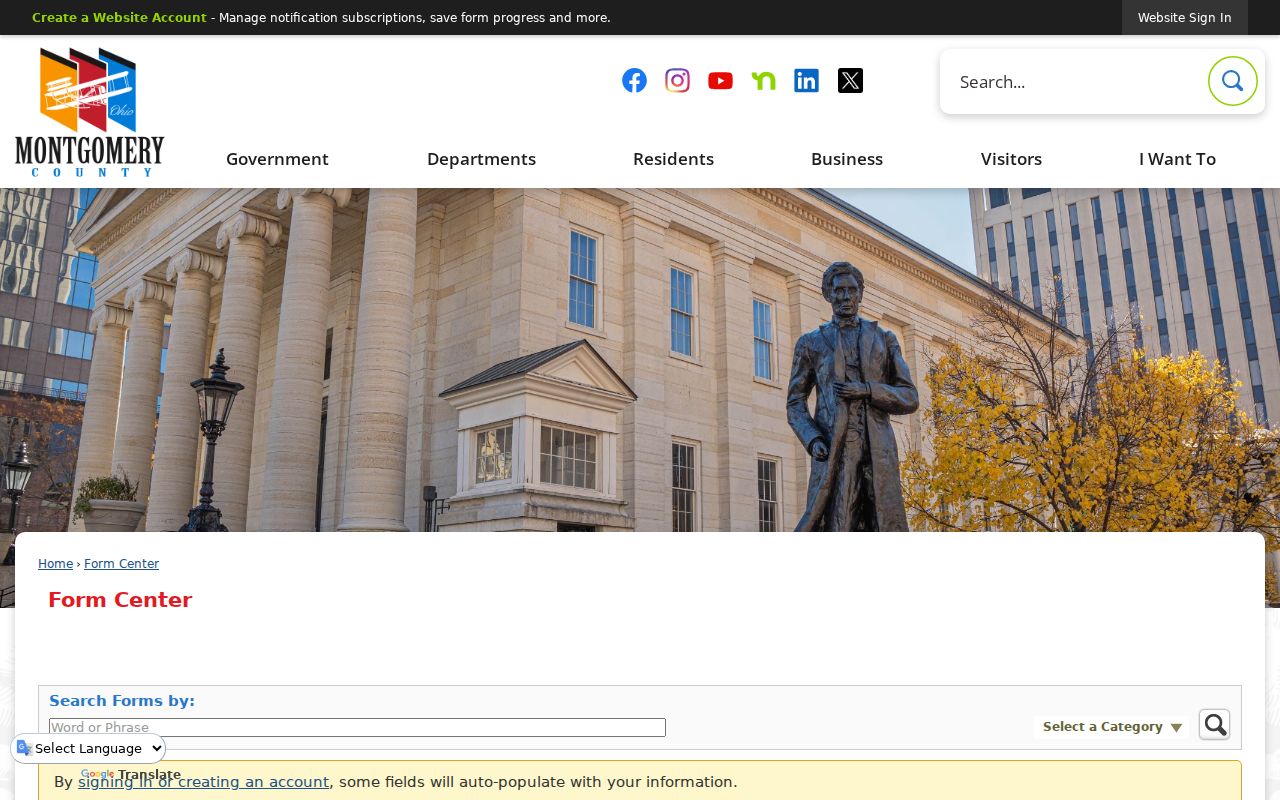
The request form supports a targeted archive inquiry when a portal cannot reach an older deed, tax, court, or probate series.
Sanborn maps require the same care. Digitized Dayton volumes are documented for 1897-1898 and 1918 through November 1950, but research did not verify a Trotwood-specific sheet run. Search by Trotwood or Madison Township at the Library of Congress or Dayton Room. Do not force a Dayton map onto a Trotwood parcel.
Trotwood Previous Residents in Directories and Census
Property records lead to transfer history. The household layer comes from sources that actually date people to a place. The Dayton Room holds city directories and documents a Haines Criss-Cross Map from the 1950s for Montgomery County, but no complete Trotwood directory or reverse-directory run was captured. Verify the exact title, year, scope, and abbreviation key before using a listing for an address. The collections themselves are described in the Trotwood city directory research.
Federal population schedules offer a second dated layer. The latest public census is 1950, and the National Archives notes the 72-year access rule. Work from the appropriate Trotwood or Madison Township enumeration location, then compare the printed address or locality with the directory, map, and deed date. The 1890 census loss is a nationwide gap, not evidence of a local records disaster.
- Confirm the address or legal-property connection from the deed and parcel trail.
- Ask for the exact available directory title or address aid for the nearest year.
- Copy its title, year, page, printed address, and abbreviation key before interpreting any listing.
- Pair that period with the nearest census schedule and compare names, locality language, and street information.
- Use a newspaper citation, deed, map, or probate file to test a difference between the two dated sources.
Directories and census schedules can disagree because they were gathered at different times and use different geographic labels. That difference is a prompt for another source, not permission to choose the more convenient answer.
Trotwood Past Residents, Obituaries, and Estates
When a person disappears from the address trail, start with a date range rather than a conclusion. HOBITS can locate obituary and death-notice citations in its documented periods. The Ohio History Connection death-index route and probate estate records offer different historical leads. A Recorder document may show an estate, trustee, or executor transfer. Each record establishes a dated documentary event. It does not establish the complete private household at an address.
Montgomery County Probate Court has jurisdiction over estates and trusts, guardianship appointments, marriage licenses, name changes, and other probate matters. Its deputy clerks maintain public Probate records, while adoption and mental-health records are not readily available. The counter is the right route for an identified estate or certified-copy question. It is not a shortcut around protected files.
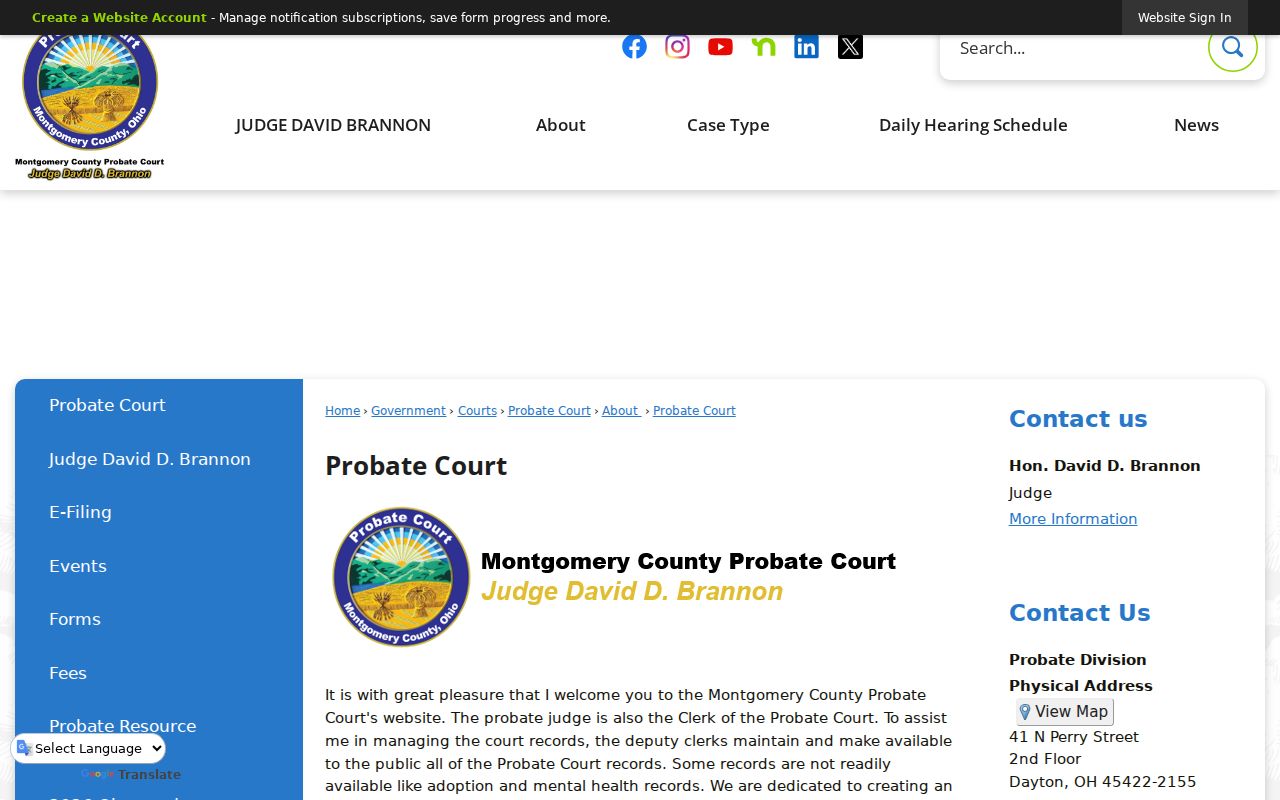
The Probate Court image represents an estate-record channel that can corroborate a dated transfer, subject to the court's access limits.
Lawful use. Use Trotwood house-history and family-history records for lawful personal research. Do not use any information to stalk, harass, or harm another person.
Trotwood Previous Residents: Stop at the Evidence
Past residents are not always discoverable from the property chain. A tax mailing address can differ from the parcel. A grantor or grantee may be a trustee, estate, company, or other recorded party. A directory might not cover the year, a census may use a different location label, and an obituary index can point only to a citation. Mark each conclusion with its date and record type.
When a known series is unavailable online, use the documented fallback chain: Recorder counter or archives for older deeds, Auditor documents for property research, Dayton Room for directory and map tools, Probate for an identified estate record, and a focused county or city public-records request for an existing municipal file. Stop when the next link is not documented. That keeps a Trotwood past-resident search accurate and respectful.
Note: Recorded owners, tax addressees, and deed parties should never be presented as a complete list of people who lived at a Trotwood address.