
Trotwood City Directory Collections
The most dependable starting point is the Dayton Room at Dayton Metro Library, not an assumed Trotwood-only book. Montgomery County's property-research guide specifically sends researchers there for city directories, maps, county histories, and wills. The Dayton Room serves Dayton, Montgomery County, and the Miami Valley, so its catalog and vertical files may use more than one place name for the same present-day area. It is on the Main Library's second floor at 215 E. Third Street in Dayton. Its stated access is Monday through Thursday from noon to 4 p.m. with appointments, while the Genealogy Collection remains in open stacks during general library hours.
| Collection | Verified coverage | Where held | Access and use |
|---|---|---|---|
| Dayton Room local history | More than 200 years of regional material | Dayton Metro Library Main Library | In person or appointment; county guide specifically names city directories. |
| R. L. Polk catalog heading | Cataloged material confirmed; full run not captured | Dayton Metro Library catalog | Check each title, publisher, year, and call number on site. |
| Haines Criss-Cross Map | 1950s | Dayton Room Map Collection | Address and orientation aid, not an occupant list. |
| Dayton Obituary and Genealogy Database | Several discrete newspaper eras | Dayton Metro Library | Online citation index; request a copy by complete citation. |
| Trotwood UCC Records, MS-614 | 1848-2018, bulk 1970-2017 | Wright State Special Collections | Off-site collection; request it two business days ahead. |
No source captured a complete shelf-by-shelf Trotwood directory run, a full publisher list, or exact reverse-directory years. That matters. A catalog heading for Polk material confirms a research lead, not that every Trotwood address appears in every issue. Ask Dayton Room staff for the particular volume and read its title page before treating it as coverage for a date or neighborhood.
Note: A library holding proves where to investigate, while a photographed title page establishes the specific volume and year used for a household claim.
Trotwood Directory Research at the Dayton Room
The Dayton Room brings together the local tools that make a historical address usable. Its resources include newspapers, maps, manuscripts, photographs, Dayton Remembers digital images, and licensed genealogy services with access conditions that may vary. The county guide also directs researchers there for maps and atlases, which can connect an old address to a tract, neighborhood, or township label. Bring the name spellings, street name variations, and date range already known. That makes it easier to ask for a targeted title or finding aid instead of assuming that a general web search has covered the collection.
The library's online genealogy list names Ohio Memory, the Ohio Death Certificate Index, Sanborn Fire Insurance Maps, Dayton Daily News periods, and HOBITS alongside other tools. Some are open research channels and some carry in-library or card conditions. City directories are one item on this larger historical shelf. A dated map or newspaper citation can support or challenge a directory lead, especially where a street was in a different township or where the printed municipal label changed.
Trotwood City Directory Names Before Trotwood
Historical indexing has a local twist. Higgins Station formed around the 1852-53 railroads, the post office took the name Trotwood in 1866, the original village plat dates to 1898, and incorporation followed in 1901. The City and Madison Township merger came much later, in 1996. A person or parcel from an earlier period may therefore sit under Higgins Station or Madison Township rather than under a modern Trotwood heading. Search all three names when the first lookup is empty.
- 1852-53: Higgins Station develops around the railroads.
- 1866: the post office uses the Trotwood name.
- 1898: the original village plat dates to this year.
- 1901: Trotwood incorporates as a village.
- 1996: the City and Madison Township merge.
This is more than a naming preference. Before the merger, an address now inside Trotwood could have been outside the former city. The digitized 1875 Montgomery County atlas is useful for township and directory-era context, but it predates Trotwood's incorporation and cannot convert a current house number by itself.
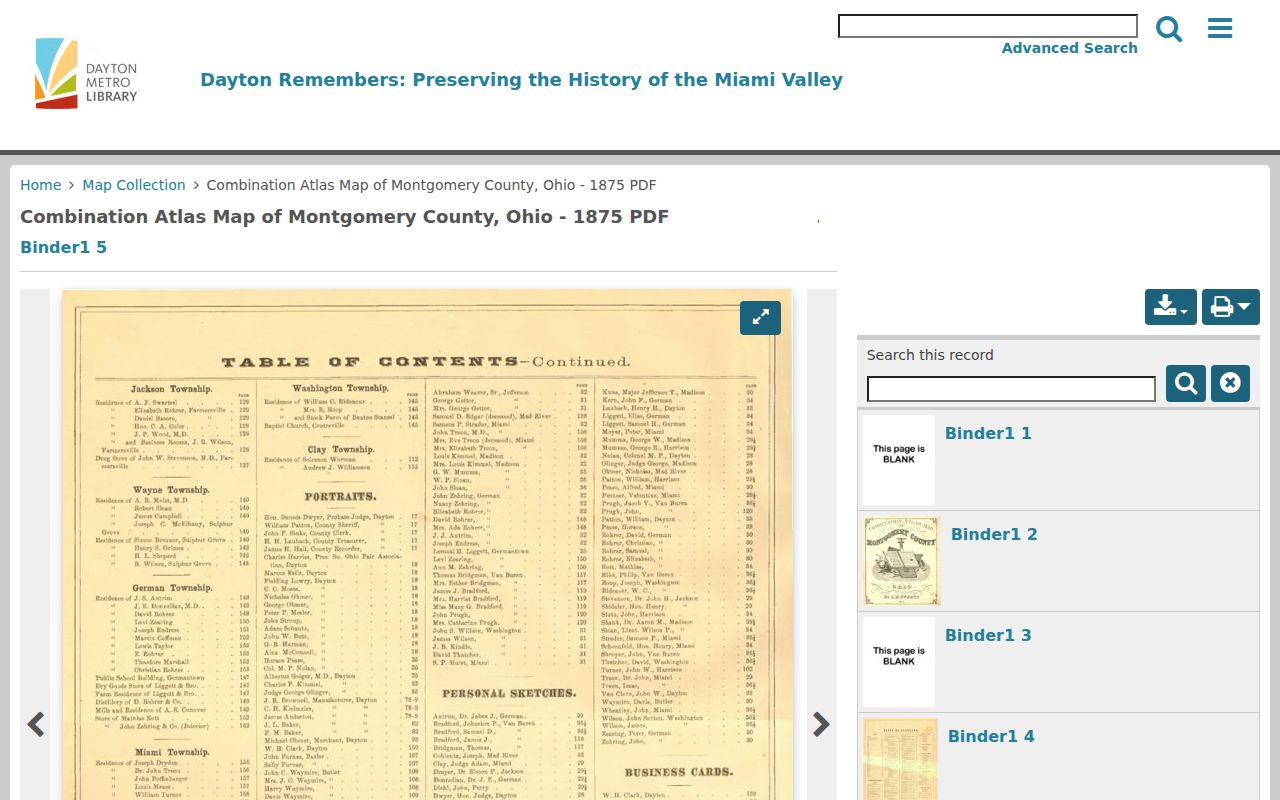
The atlas image is a reminder to test historic place names and legal geography before reading a present-day boundary back into an older record.
Reading a Trotwood City Directory Entry
No readable Trotwood-era directory page or front-matter abbreviation key was captured in the research. That gap rules out a made-up sample entry. Historical directories often use compact conventions, but the meaning of a mark, field order, or householder label belongs to the particular title and year. Photograph or transcribe the page and its abbreviation key together. A name and address are only the start of a dated comparison.
| Title and year | Record the exact volume before extracting any entry details. |
|---|---|
| Publisher and page | Capture both so another researcher can return to the same printed source. |
| Abbreviation key | Read the volume's own front matter before interpreting symbols or shortened words. |
| Name and printed address | Copy the text as printed, then compare it with the map, census, and parcel record for that date. |
| Unverified fields | Do not assume spouse notation, occupation, owner marks, or a reverse section until the exact volume shows them. |
- Criss-cross directory
- An address-oriented finding aid that may help move from a street to listed names when a verified volume includes that arrangement.
- Householder index
- An index organized around a household or address, if the specific publication supplies one.
- Abbreviation key
- The publisher's explanation of its own shortened labels and marks, usually found in the volume's preliminary pages.
Read the page as evidence from one point in time. A changed surname, a widow notation, or a different address can create a lead for a newspaper or probate search. None of those clues alone proves identity, a move, or a family relationship.
Trotwood Address Aids and Criss-Cross Clues
The Dayton Room Map Collection documents a Haines Criss-Cross Map for Montgomery County from the 1950s. Its circular-distance design centers on Third and Main in Dayton. Use it as an orientation aid when an address appears in a checked directory or other dated source. It is not a direct Trotwood occupant record, and its presence does not prove that every Trotwood street or year has a reverse listing.
Maps are especially useful when a deed carries a lot, block, subdivision, or tract description rather than a modern street address. Compare that legal geography with the relevant year, then return to the printed source. For current address-keyed ownership and parcel work, the Trotwood street directory route uses the Auditor and Recorder chain rather than rebuilding the historical shelf here.
Trace a Household Across Trotwood Directories
Work in dated steps. Start with a known person, address, or time window, then ask the Dayton Room for the exact available title. Check Trotwood, Madison Township, and Higgins Station terms. If a volume places the household at an address, compare the result with an address aid from the same period where one is verified. Keep the date of every item. Directories may reflect information collected before their publication date.
- Find the first confirmed dated appearance in a checked directory volume or related historical source.
- Copy the title, year, page, exact printed name, address, and every abbreviation that the volume itself defines.
- Move one issue forward or backward at a time, looking for a changed address or name form without treating it as proof of a move.
- Pair the directory period with the nearest available federal census, beginning with the 1950 location for Madison Township or Trotwood and working back as needed.
- Use a newspaper citation, probate record, map, or deed trail to test a change that needs another source.
The National Archives 1950 Census search is the latest public federal schedule under the 72-year rule. Census fields vary by year, and the 1890 federal census has a major nationwide loss. Treat a census address as a dated corroborating record, not a complete bridge across every missing year.
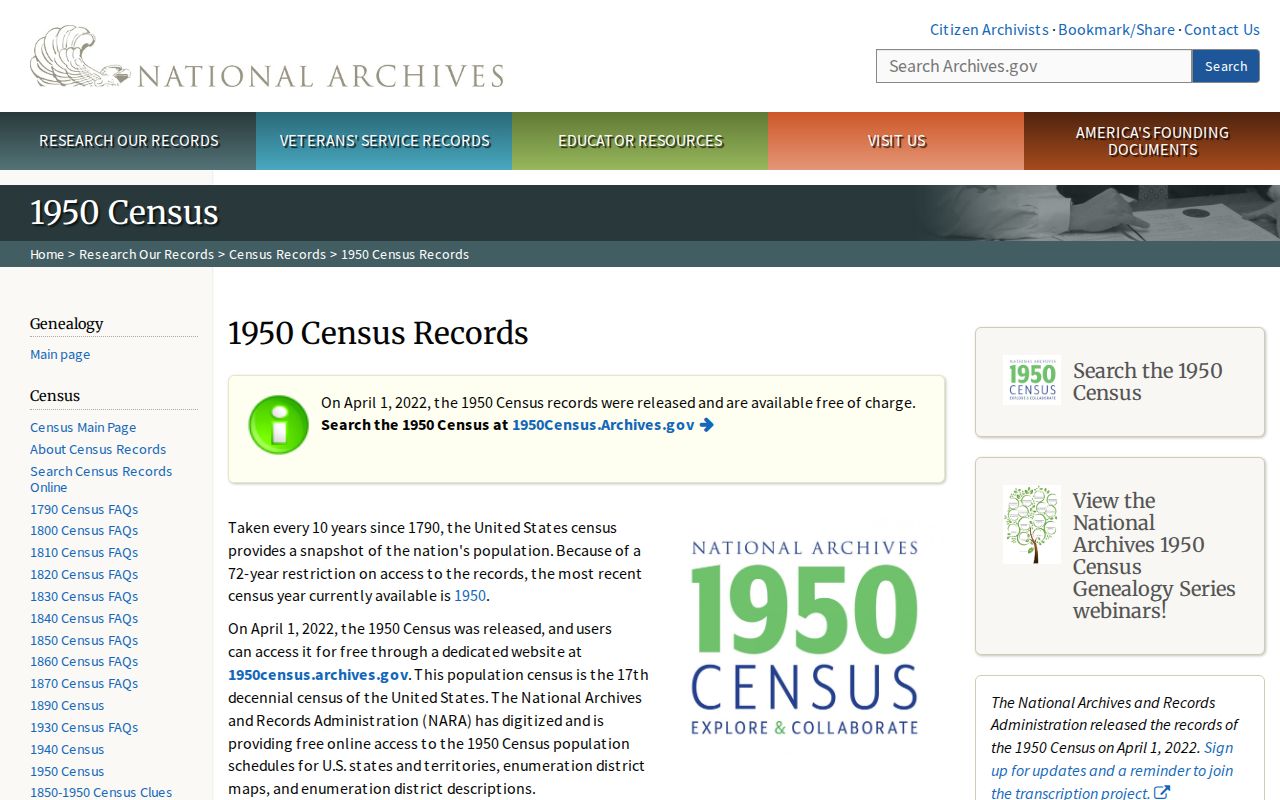
The census image supports the year-by-year method: pair one dated source with another instead of filling a gap by guesswork.
Trotwood Directory Leads and HOBITS Citations
The Dayton Obituary and Genealogy Database, HOBITS, is a citation index rather than a full-text obituary collection. Its documented obituary and death-notice runs are 1850-1880; 1897-1898; 1900; 1903-1918; 1920-1939; 1951-1957; 1965; and 1985-present, with additions made over time. The form supports name, keyword, publication, date, volume, issue, page, and column searches. That makes it a good way to test a directory lead against a dated notice.
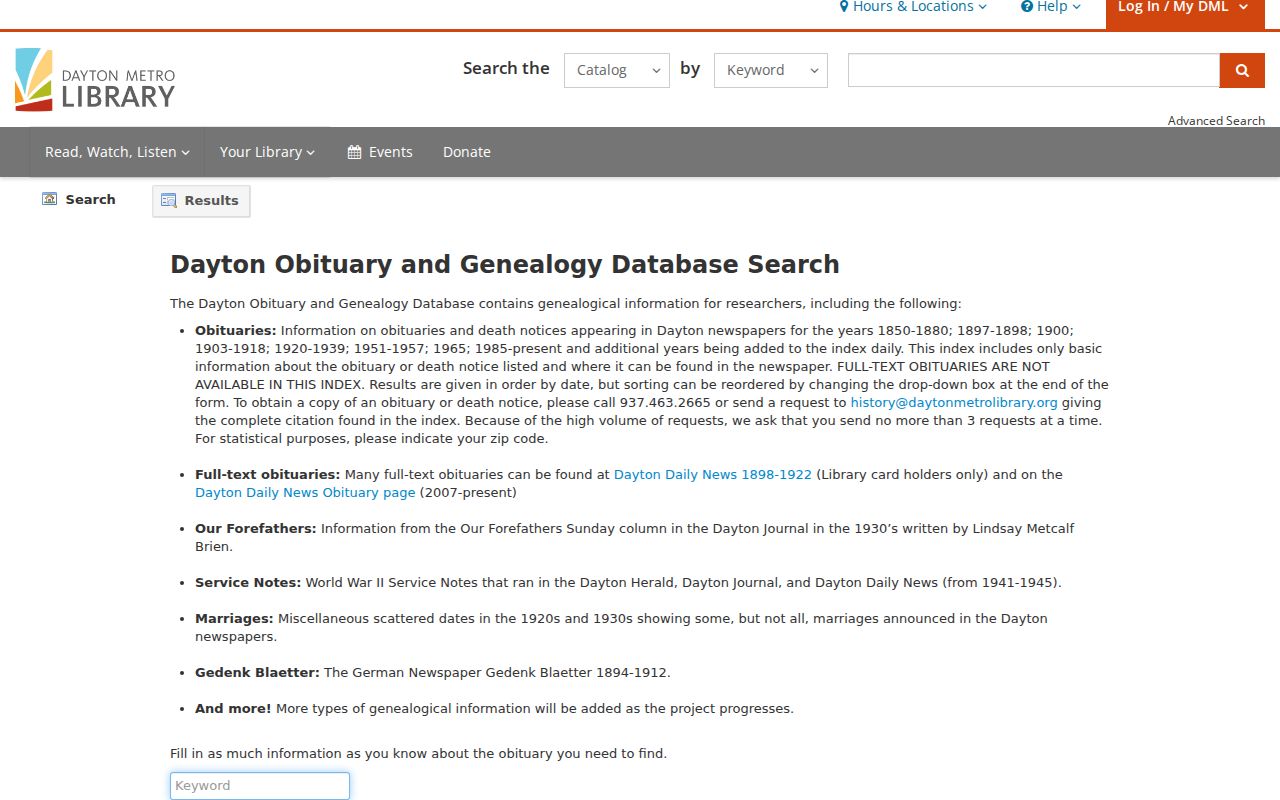
The HOBITS result screen supplies citation details, not the notice text. Dayton Room staff ask for the complete citation and accept up to three copy requests at a time by phone or email.
A disappearance from one source can have many causes. The person may have moved, died, changed name, been missed by the index, or simply fallen in an uncovered period. Compare HOBITS with Ohio History Connection material, a probate estate record, and the next available directory title before drawing a conclusion.
Trotwood Directory Context in Church Records
Wright State's Trotwood United Church of Christ Records, MS-614, adds a distinct local layer. The off-site collection spans 1848-2018, with most material from 1970-2017. It includes membership rolls and books, attendance records, newsletters, bulletins, photographs, and property, tax, and warranty-deed materials. Request it at least two business days ahead. Its finding aid notes gaps in early and vital entries.
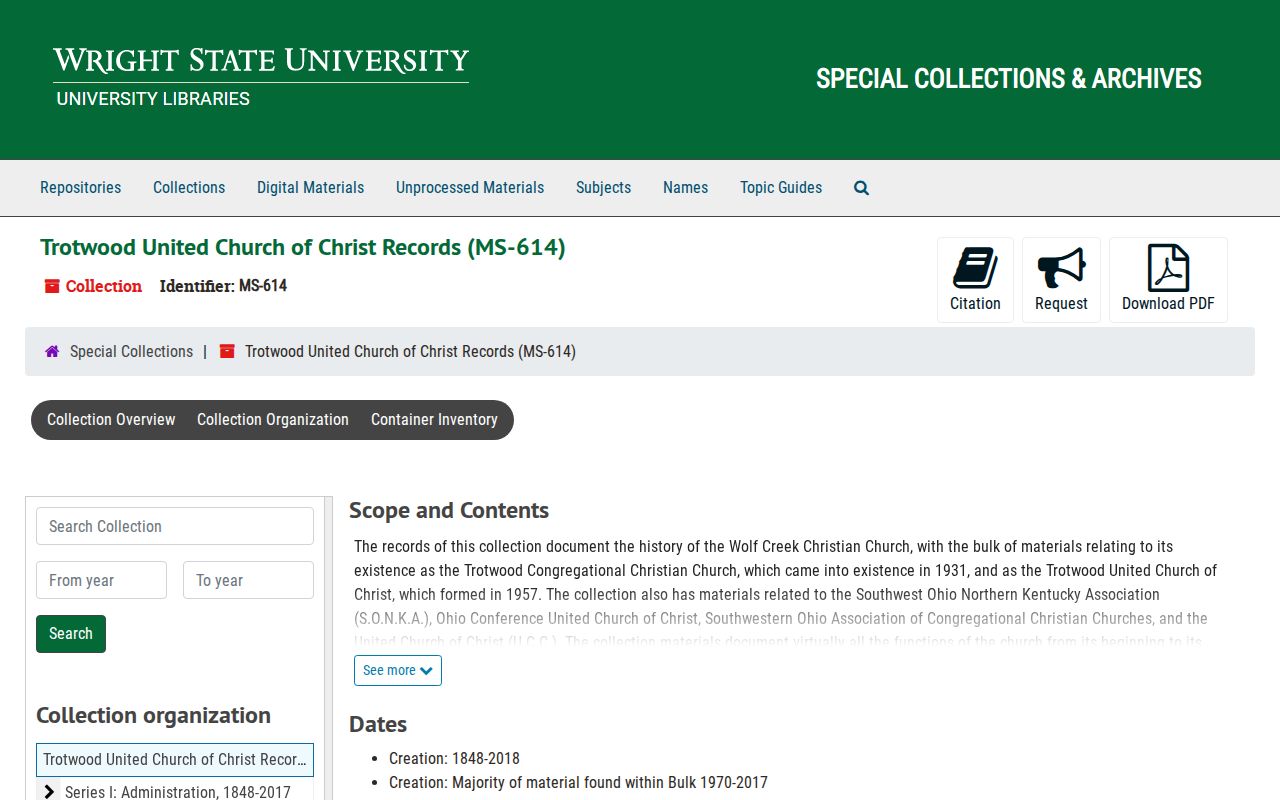
The finding aid shows why a church archive should be compared with dates from directories and census schedules, rather than treated as a citywide resident roll.
The City also identifies the Trotwood-Madison Historical Society and Iams Homestead Museum as a local referral for Higgins Station, early settlement, the 1898 plat, Madison Township, and the merger. Its online collection scope, hours, and research policy were not captured, so contact the organization rather than claiming an unverified surname or directory database.
A City historical-society listing confirms the local referral route.
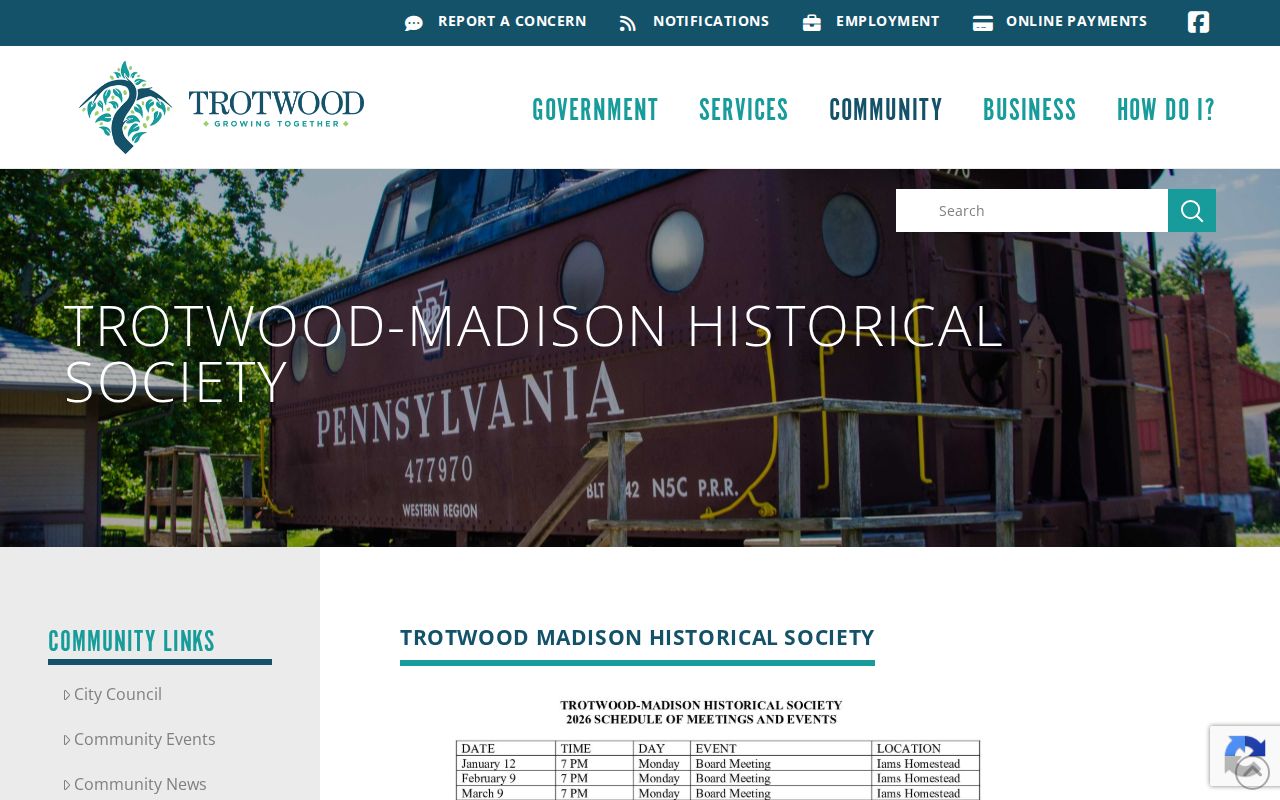
The historical-society image points to an in-person research lead, not a published online directory of local residents.
Trotwood Directory Research Limits
Several gaps should remain visible in a careful search. No authoritative complete directory run, Trotwood-specific sample entry, or confirmed Trotwood Sanborn sheet run was located. Dayton Sanborn volumes dated 1897-1898 and 1918 through November 1950 are documented, but Dayton coverage is not automatic coverage for Trotwood. Search the Library of Congress or Dayton Room by place before using a fire-insurance map for a parcel.
Older records also need local geography. Montgomery County's Records Center and Archives holds a public research area and a staff-searchable index for roughly 47,000 storage locations. Its historical guide identifies deed, name, and tract indexes, maps and plats, tax duplicates, court and election series, and other records. Retain a street name, a legal description, and each historic place label. Those details give the custodian a workable way to locate an existing record.
Note: A city-directory hit is historical evidence, not proof that a person still lives at an address or has any current connection to it.